Showing posts with label Homer. Show all posts

Thursday, November 3, 2016

How to Understand and Enjoy Greek Literature by Madison Levinson

Greek literature can be very difficult to read and therefore even more difficult to enjoy. Recently, in class, we read The Iliad by Homer. Although we did not read the entire epic, the books we did read of it were frustrating to understand and unpleasant to sit down and read. This left many people procrastinating reading it and put off the reflection questions until the night it was due. Students were scrambling for important quotes and asking others for their interpretations of the text. However, using the rest of this article on how to understand Greek literature, this last minute fright will be a thing of the past...almost as far in the past as the literature you will be reading!

Homer, author of The Iliad 
Since I have personally read The Iliad I will use that epic as an explanation for all of my tips and tricks. But first I will provide a brief explanation of The Iliad for those who have not read it, I wouldn't want anybody to be lost in an article about not getting lost while reading a text!

The Iliad was composed around 800-725 BC, and written by Homer anytime from 725-625 BC. The Iliad is the story of the final weeks of the Trojan war and the Greek siege of the city of Troy. The text follows characters such as Achilles, Agamemnon, Hector, Athena, Aphrodite, Apollo, and Hera. The Trojans and Greeks were fighting because Helen of Troy ran away with Paris, leaving the Trojan King with no wife, locking Troy and Greece into a war of seemingly no end. The poem follows the warriors and their decisions with the influence of the Gods while also teaching valuable lessons to the reader. So how did I figure out all of this information from the impossible epic? Well I am here to show you.

Step 1: Know who's who

An artist rendition of Helen of Troy, the cause of the Trojan War
The first step to understanding any difficult literature is understanding who you will be reading about. In The Iliad there were countless characters to keep track of and various spellings and nicknames for everybody. At the beginning of the book I made a character outline of each person and their relationship to one another as well as if they were Greek or Trojan. For example, Achilles, the Greek, was a warrior who hated the Trojan, Hector, for the murder of Patroklos, the best friend of Achilles. This connects three seemingly random characters to one another and explain their interactions with one another. Keep this character chart with you at all times to refer back to and refresh your memory.

Step 2: Know what you are reading

The second step to understanding difficult literature is to understand what you are actually reading. In The Iliad there are numerous rants and descriptions that can get somewhat lengthy and confusing. Often, I didn't know where the description ended and the actual story began. To prevent this confusion, it is beneficial to read a short summary of the story, like Spark Notes or Cliff Notes. By reading a summary of Spark Notes and then going back and reading the actual literature I had an idea of the chronological order of the story. Any interjections or descriptions were clear as to their end point and I was clear when the actual story picked up again.

Step 3: Do not focus too hard

The third step to understanding difficult literature is not to get caught up on all of the little details. In The Iliad it can be hard not to focus on every little word or every little sentence. It seems like every letter is somehow significant or meaningful. Greek literature is in fact no different than literature we read today. When reading a book do you take notes on every sentence and remember every line of dialogue? So why should you have to for Greek literature? There are often frivolous rants a character will have with themselves, gods, or other mortals. Not all of these sentences are important and necessary to the development of the story. Approach Greek literature as you would any other text and just read, don't worry about a sentence that may seem vague or obscure.

Greek literature does not have to be frustrating and difficult. The story lines are often full of plot twists and dynamic relationships between characters, making it an overall fascinating read. With these tips any reader can find the excitement in Greek culture and classics.

Monday, October 17, 2016

Tips and Tricks to Reading and Understanding Beowulf and other Difficult Texts by Sarah West

Over the past few weeks, our 10th grade english class has been engaged in reading and studying our first required literary work of the year, Beowulf. Even though this epic has been translated from its original old-english form, the difficult language and anglo saxon literary elements make this text a difficult read for most students. I, for one, found it specifically challenging to decipher the plot through the hodgepodge of kennings, epithets, unfamiliar language, complicated names and a structure that most students are not used to reading. During my struggle, I came across what I believe is the most useful tool in understanding difficult texts: SparkNotes. Ironically, I, along with most of my fellow peers, had been told throughout our academic careers to avoid this incredibly effective resource, because it would have a negative effect on our reading and comprehension when substituted for the genuine text. However when used correctly, along with and the assigned text, I have found SparkNotes to be a very helpful device in deepening my understanding of the text.

When attempting to read an excerpt from Beowulf, such as the following, for the first time it can be easy to get lost in the words and be unable to understand the details of the plot:
"For him the keen-souled kinsman of Hygelac
held in hand; hateful alive
was each to other. The outlaw dire
took mortal hurt; a mighty wound
showed on his shoulder, and sinews cracked,
and the bone-frame burst. To Beowulf now
the glory was given, and Grendel thence
death-sick his den in the dark moor sought,
noisome abode: he knew too well
that here was the last of life, an end
of his days on earth."

After reading this, it is probably understood that a fight is happening between Beowulf and Grendel. However, reading the chapter summary on SparkNotes may offer a new perspective and allow the reader to better interpret the details. Now, rereading the passage with the knowledge that in this section Beowulf rips off the arm of the monster Grendel and wins the battle, which is clearly stated in the summary, it is easier to recognize the connections between the words of the text and what the text is actually trying to communicate. For example the words "a mighty wound showed on his shoulder" and "the bone-frame burst" that may have been hidden before, now stand out, obviously referring to Grendel's arm being torn off.

Similarly in The Iliad by Homer, another epic our class has begun to study, long speeches and the many characters can be just as confusing:
"Then all the rest of the Achaians cried out in favor
that the priest be respected and the shining ransom be taken;
yet this pleased not the heart of Atreus' son Agamemnon,
 but harshly he drove him away with a strong order upon him:
 'Never let me find you again old sir, near our hollow ships,
neither lingering now nor coming again hereafter,
for fear your staff and the god's ribbons help you no longer.
The girl I will not give back;
sooner will old age come upon her in my own house'"

After consulting the SparkNotes summary it is known that Agamemnon is refusing the ransom offered by the priest for his daughter. It is now possible to deduce that since "the Achaians cried out in favor... the shining ransom be taken" but Agamemnon claims "the girl I will not give back", he does not take the opinion of his people into consideration, and is acting selfishly, by refusing to give up the girl even though his people are begging him to. It is also easier to see that Agamemnon is speaking to the priest, banishing him away from hime and his people, when he says "never let me find you again old sir, near our hollow ships".       

This may seem like a lengthy process, but when the understanding of the text is more complete it is easier to focus on the more important aspects of studying a piece of literature such as characterization and important themes. In other words; it's worth it to give it a try. Also, as I used this method throughout my reading, I found the more I used it, the less I needed it. As I became more acclimated to the language and structure of each epic, I picked up on more details and began to understand the plot better without using SparkNotes than I originally had. Not only are SparkNotes useful in understanding difficult texts, they also serve as a way to practice picking apart the meaning and pulling out the important details of and working through challenging passages, a skill that can be very helpful in testing environments, when this resource may not be available.  

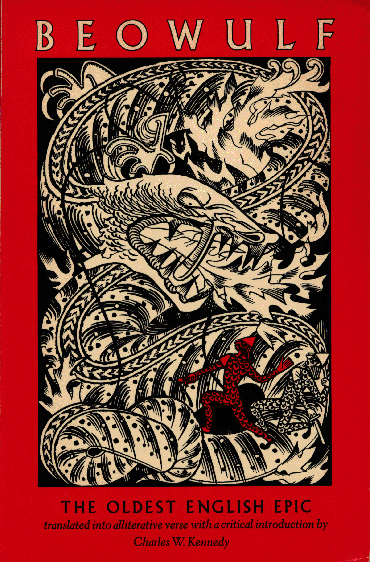
Beowulf on SparkNotes

Thursday, October 6, 2016

Mirror Mirror: A Parallel Story to Homers' Famous The Iliad by Jillian Parks

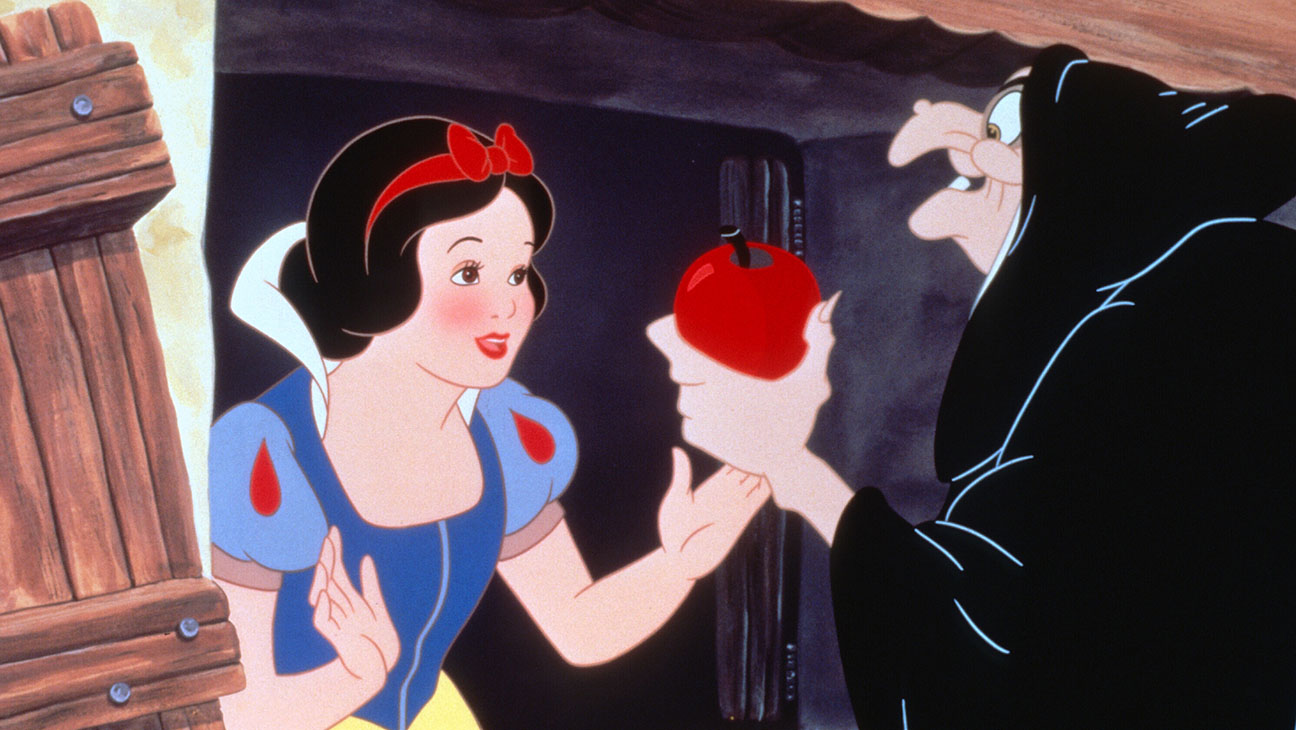
Snow White: A Parallel to the Iliad

Thousands of years ago, one man of the name of Homer created two books that would shape the rest of time. These books, titled The Iliad and The Odyssey, depicted themes and ideas that are still easily seen in modern day movies and novels, one of them being 'who is the fairest in the land?' In the Iliad, three goddesses were competing for the spot for fairest in the land, and when another goddess, Helen, is chosen instead, this sparks a severe jealousy in the other three goddesses. Although the main plot point of the book is how Helen sparked a twelve year war because of love, there are many movies that support the other theme, including Snow White and The Seven Dwarves. In this movie, a magic mirror, when asked by the queen, constantly says Snow White is the fairest of the land. Jealous of Snow White's beauty, The Wicked Queen orders for the death of her, but when she finds out that Snow White has not been killed, but hiding in the woods, the queen disguises herself as an old hag with a poison apple, ready to kill. This movie revolves around the idea of 'fairest in the land,' because this theme and jealousy contributes and is the reason for everything that happens in this fairy tale.