Showing posts with label Rush. Show all posts

Tuesday, January 3, 2017

2112- A tale of lies and Rebirth


2112- A story of deception, propaganda, and sadness

By Derek Campbell
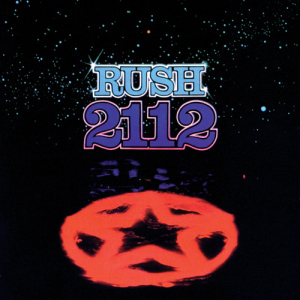
In one of the past blogs I've posted, I mentioned a Rush song called 2112, a 21 minute, 7 part song that could be a stand alone short story. It is an episodic tale of a seemingly utopian future. However, like most science-fiction books of a similar plot, the listener eventually learns that this is a dystopian future, bent on propaganda, deception, and total control. This is the general idea of the story, but the true emotions come to fruition when you listen to the song and read the story. That is why I have typed the narrated story and left a link to the song, so that you too, can achieve an elevated understanding of not only the song, but of themes, morals, plot, and other important topics regarding literature:


Song: RUSH- 2112


Included Narration:


I lie awake, staring out at the bleakness of Megadon. City and sky become one, merging 
into a single plane, a vast sea of unbroken grey. The Twin Moons, just two pale orbs as they trace their way across the steely sky. I used to think I had a pretty good life here, just plugging into my machine for the day, then watching Templevision or reading a TemplePaper in the evening.

My friend Jon always said it was nicer here than under the atmospheric domes of the Outer Planets. We have had peace since 2062, when the surviving planets were banded together under the Red Star of the Solar Federation. The less fortunate gave us a few new moons. 
I believed what I was told. I thought it was a good life, I thought I was happy. Then I found something that changed it all...

[I. Overture]


The massive grey walls of the Temples rise from the heart of every Federation city. I have always been awed by them, to think that every single facet of every life is regulated and directed from within! Our books, our music, our work and play are all looked after by the benevolent wisdom of the priests...


[II. Temples of Syrinx]


Behind my beloved waterfall, in the little room that was hidden beneath the cave, I found it. I brushed away the dust of the years, and picked it up, holding it reverently in my hands. I had no idea what it might be, but it was beautiful...


I learned to lay my fingers across the wires, and to turn the keys to make them sound differently. As I struck the wires with my other hand, I produced my first harmonious sounds and soon my own music! How different it could be from the music of the Temples! I can't wait to tell the priests about it!...


[III. Discovery]


In the sudden silence as I finished playing, I looked up to a circle of grim, expressionless faces. Father Brown rose to his feet, and his somnolent voice echoed throughout the silent Temple Hall...


Instead of the grateful joy that I expected, they were words of quiet rejection! Instead of praise, sullen dismissal. I watched in shock and horror as Father Brown ground my precious instrument to splinters beneath his feet...


[IV. Presentation]


I guess it was a dream, but even now it all seems so vivid to me. Clearly yet I see the beckoning hand of the oracle as he stood at the summit of the staircase...


I see still the incredible beauty of the sculptured cities and the pure spirit of man revealed in the lives and works of this world. I was overwhelmed by both wonder and understanding as I saw a completely different way to life, a way that had been crushed
by the Federation long ago. I saw now how meaningless life had become with the loss of all these things...


[V. Oracle: The Dream]


I have not left this cave for days now, it has become my last refuge in my total despair. I have only the music of the waterfall to comfort me now. I can no longer live under the control of the Federation, but there is no other place to go. My last hope is
that with my death I may pass into the world of my dream, and know peace at last.


[VI. Soliloquy]


[VII. Grand Finale]


It is a sad tale, inconclusive and unfulfilling. The song teaches us the importance of the beauty of life and the little details that make life worth living. It also touches on the idea of "Peace vs. Freedom", what are you willing to give up for security ("Can you put a price on peace?" (David Scott Mustaine))? Under closer examination, you may find several more themes seamlessly woven into the lyrics of the song. However, there are so many that I cannot list all of them now.


The point of this is, music and literature aren't so different after. They both tell intricate stories and include many rhetorical devices and thematic messages, and 2112 twelve I thought was the perfect song to choose to show the bridge.


FUN FACT: The reason why it's called 2112 is still unclear. Some think its the year the story takes place, while others believe it is named after the protagonist "Anonymous 2112". Some believe the name is suppose to pay homage to Tchaikovsky's 1812 Overture, and some goes as far as a conspiracy and numbers game found within the lyrics.   

Friday, October 21, 2016

Music and Literature:

by Derek Campbell

As most of us know, singer-songwriter Bob Dylan won the 2016 Noble Prize in Literature. This was a ground-breaking event, as he was the first musician to receive the award. It just goes to how people's interpretations of literature can go many ways. However, novels and poems are more closely related to music than what meets the eye. Here is a list of some famous artists with songs that were based upon books/poems:

- IRON MAIDEN:
Iron Maiden has been known to delve into books and historic events for song inspiration. Some of these include:

- THE TROOPER:
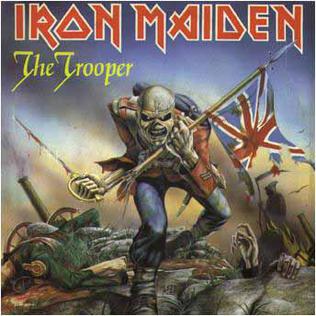
Released in 1983, the song is describing the Crimean War (and specifically the Battle of Balaclava). The song has also been traced to Lord Alfred Tennyson's poem The Charge of the Light Brigade, to which both describe the Brave 600 English soldiers who marched into the gruesome and brutal battle who made the decision to die for their country
Image result for charge of the light brigadeImage result for iron maiden the trooper


- BRAVE NEW WORLD:
Delving into the realm of science fiction, the main inspiration of this song was Brave New World, a 1932 classic from author Aldous Huxley. Both describe a futuristic, totalitarian pseudo-utopia/dystopia in London. Apparently, Lead singer of iron maiden Bruce Dickinson reread the book and decided to make a song about it. Fun fact, the title "Brave New World" can be traced to Shakespeare's last play ( The Tempest, 1612) "How beauteous mankind is! O brave new world, that has such people in't!"


Image result for brave new world bookImage result for brave new world album


-METALLICA:
Metallica is a heavy metal band that started in the 80's, but just because the music's loud doesn't mean there isn't meaning in the songs. Some of which include:

-ONE: 
Released on the album ...AND JUSTICE FOR ALL, this is my all-time favorite song from that album. It is a story about a soldier in war who has a mortar go off in his face. He survives, but sadly with out arms or legs and he also loses the ability to hear, see, taste, and smell. Wondering what kind of life this is, he uses morse code to spell out the words "K-I-L-L-_-M-E...". James Hetfield (guitarist, vocalist, and songwriter) based this song on Dalton Trumbo's novel Johnny Got His Gun. In fact, there is one line passage in particular that I believe represent the message of the song perfectly:

Image result for one metallicaImage result for johnny got his gun

"How could a man lose as much of himself as I have and still live? When a man buys a lottery ticket you never expect him to win because it's a million to one shot. But if he does win, you'll believe it because one in a million still leaves one. If I'd read about a guy like me in the paper I wouldn't believe it, cos it's a million to one. But a million to ONE always leaves one. I'd never expect it to happen to me because the odds of it happening are a million to one. But a million to one always leaves one. One"

-THE CALL OF KTULU/THING THAT SHOULD NOT BE:
Although these are two separate songs, they both take from the same piece of literature. Metallica has made it known that popular horror author H.P. Lovecraft was a large influence to the band, and these songs are a way of honoring the author. Both of these songs are based on one of Lovecraft's most famous novels The Call of Cthulhu. The story is about a man and his uncovering of notes about a mysterious underwater deity known as Cthulhu, and then the horror that follows. The first song (which goes by a similar title) is entirely instrumental, but the title itself reveals something. The book states that mentioning the name Cthulhu will bring him closer, which is why the "Ktulu" is purposely misspelled (for fear of the beast). The second song, Thing That Should Not Be, is paying homage to the character Cthulhu (still avoiding the word itself in the song/title). This can be seen in the main chorus of the song:

Insanity
He watches
Lurking beneath the sea
Great old one
Forbidden site
He searches
Hunter of the shadows is rising
Immortal
In madness you dwell

(the shadow rising is also based on a Lovecraft story, The Shadow over Innsmouth)


Image result for call of cthulhu novelImage result for ride the lightningImage result for master of puppet


-FOR WHOM THE BELL TOLLS
This Metallica classic is a song about the futility of war and directly relates to Ernest Hemingway's novel For Whom the Bell Tolls (which was based on a poem from 1623 by John Doone). The novel is about an American sent to take out a bridge under the control of a Fascist Army during the Spanish Civil War (which is evident in the song)
Image result for for whom the bell tollsImage result for ride the lightning


-RUSH:
Rush is oldest out of all the previously listed bands and said to be a major inspiration to them. Their songs are powerful, and usually contain something of a message ins them. Examples include:

- 2112:
This song is a seven part anthem that is approximately 20 mins long, and tells a story in different parts (much like chapters in a book). This song itself can be called a short story (as the printed version of the song contains unsung narration) and highly suggest listening to it and reading the story. This song was supposedly inspired by the novella Anthem by Ayn Rand (which tells the story of dystopian future and another dark age, similar to that in the song
Image result for anthem bookImage result for 2112


- THE STARS LOOK DOWN:
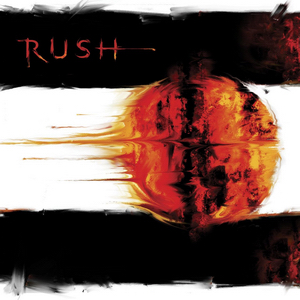
A more depressing and unsatisfying tale, this is based on the novel The Stars Look Down by A.J. Cronin. It tells the story of a pre-WW1 miner actively seeking change in his dangerous occupation, but loses hi battle for change and parliament and his wife in the process (to which the miner continues his work as a miner, defeated). This song was written by the band's drummer Neal Peart, to which he took this personally (as he had lost his wife to cancer), issuing the statement "This seemed to express a fitting view of an uncaring universe."
Image result for vapor trails albumImage result for the stars look down book


-TOM SAWYER:
This is a song based on Mark Twain's novel by the same name (really doesn't need an explantation)
Image result for tom sawyerImage result for spirit of the radio
And there are many more songs like this out their. It just goes to show you that some songs aren't just words, and that you way need to pick up a book to fully comprehend the meaning of a song...