Showing posts with label Music. Show all posts

Wednesday, May 24, 2017

Live Life to the Fullest by: Jillian Parks

"Philippines declares martial law as army clashes with ISIS-backed terror group"


"Terror Alert in Britain Is Raised to Maximum as ISIS Claims Manchester Attack"


"The US and North Korea: From mutual praise to threats of nuclear war, in 10 years"


We are living in a world with constant war, fighting, tragedies. So many precious lives are lost every single day, and yes, we have to live with it every single day. These recent attacks and threats dig holes into our very souls, yes, because we cannot face the thought of losing a sister, a brother, a friend, a daughter, a husband, a wife or whomever may be dear to us. The terrors drill and drill until we feel as though this may not be a world we want to face, as we are too afraid of what might happen if we step out into it. 

But I believe that we cannot let these attacks and threats shape the course of our lives, because I believe that we need to make sure to live life to the fullest, because if we were to live life in fear of getting a disease, getting shot, getting bombed or even getting broken-hearted, then the life we would live would not be the one we want. Sure, you may feel safe, but would you ever feel excited? Sure, you may have saved yourself from heartbreak, but what if you were to have found a person that made you feel ten times happier than you were before? I think we need to make sure of challenging ourselves throughout life, because even in the small chance of possible death, we know that we would be dying doing something worth while. If we keep our hearts locked up, we may never know what could have been in store for us had we just let someone in. 

The most recent attack, as most everyone certainly knows, is that of Manchester. Our hearts may never heal fully from the attack, and even though I am truly and deeply heartbroken and feel awful for the lives lost only a few short nights ago, I am even more afraid of what may happen after. I am afraid that fans will no longer attend a concert they have been dreaming and saving up for since they were ten. I am afraid artists may not give everything they've got into a performance because of a very small, insignificant feeling that their concert could be the next attack. Or even worse: a performer not showing up for their concert at all. I am hoping that this incident has not shaken the rest of pop culture, because where on earth would we be without Friday and Saturday night concerts to let us let go into music and sound that we have a passionate love about? Again, who was lost a couple nights ago, as well as in the Philippines, will never and should never be forgotten because the world should not be this cruel. But sadly, we have to remember that it is, and there will always be antagonistic and dreadful people who walk the earth. So the only thing we can do is not let it define who we are. 

We need to stand tall and proud. We need to keep selling out at concerts and sing our hearts out with no fear. We have to walk the streets of London with our heads high, showing no signs of weakness because there are so many good people. So many more good than bad, and we cannot let that small portion stand between us and the life we want to live.   

Tuesday, May 9, 2017

Music and Literature 2- DC

Music and Literature 2: The List Continues

By Derek Campbell

The relationship between music and literature is one with extremely faded borders, constantly overlapping with each other. Here are 5 more examples of music/book cross-overs (as a continuation from the previous list)


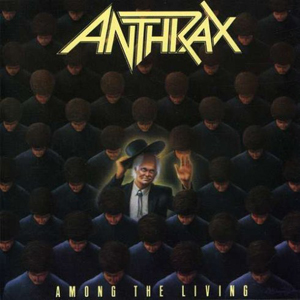
Among the Living:

Being released by thrash metal band Anthrax in 1987, this song was reportedly based upon Stephen King's critically acclaimed novel The Stand. With the novel being published in 1978, the story describes a post apocalyptic future struggling under a new super influenza virus (also known as "Captain Trips"), and focuses on a small group of survivors in an area called the "Free Zone".  The song constantly refers to the novel and alludes to it often. Even the first line of the song is: "Disease! Disease! Spreading the disease. With some help from Captain Trips".   


Misery loves Company:

Another song by Anthrax (released in 1988), which also happens to be based on a King classic. If the title didn't give it away, this song was based upon the 1987 psychological horror story Misery. The story revolves around fictional author Paul Sheldon, who gets caught in a snow-storm and kidnapped by his supposed number 1 fan, Annie Wilkes. What proceeds is a shocking and gut-wrenching tale of a deranged psychopath and her captive writer, with copious amounts of torture filling every nook and cranny of the book (like breaking legs with a sledgehammer). Although the song does not directly refer to Paul or Annie, with lines like "I'm your number one fan, Misery loves company, Die with me", and "You know me, and I can be, A very, very vicious critic", it's obvious where the source material for the song came from.


Behind the Wall of Sleep :

A staple in metal history and classic, Behind the Wall of Sleep is an amazing Black Sabbath song released 47 years ago (relaxed in 1970). However, the inspiration for this song came 51 years before that, in the form of H.P. Lovecraft's short story Beyond the Wall of Sleep. The story describes the experiences of a mental hospital intern with criminally insane patient Joe Slater. Slater had many visions of light beings and fantastic stories, which was shown to the intern through a telepathic communicator. Slater eventually dies and becomes a "star" (you have to read it to truly comprehend it). The song constantly uses phrases such as "Visions cupped within a flower", "Feel your spirit rise with the breeze, Feel your body falling to it's knees", and "Sun shines in you have awoken", which relate to the story itself.


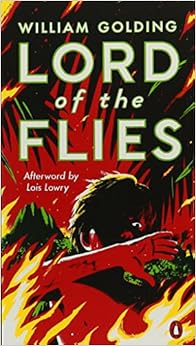
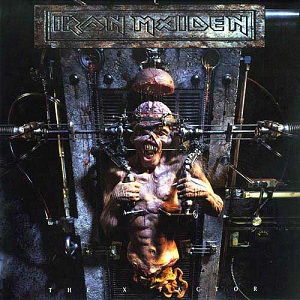
Lord of the Flies:

Released by Iron Maiden in 1995, it is obvious to see that this was based on William Golding. I won't go into plot, as there are already countless blogs about Lord of the Flies. The entire song itself is a basic retelling of the story, but one of the most important part of the song comes in when this line is sung: "Saints and sinners, Something within us, We are lord of the flies". Not only does the song maintain the story, but it's evident that it retains themes and messages, exploring the idea that the Lord of the Flies is not a physical being, but one that is within all of us.


Phantom of the Opera:

Another song with obvious origins, this 1980 Iron Maiden classic was based upon Gaston Leroux's 1909 classic novel and play of the same name. Again, considering the wide range Phantom of the Opera has, there is really no need to explain the story (its basically the story of desire and deformities). One important thing I would like to note is that the song is written in first person from the perspective of Christine DaaĆ©, rather than the third person style of the novel.


And there are plenty more songs out there that directly tell the story of or relate to novels. This further solidifies the relation of books and music, and shows how humans can experience the same story in extremely different ways.

Sunday, March 12, 2017

Does music help you focus? -Natalie Earl

             I have always listened to music as a stress reliever so that when I do homework or study for school it would not be as boring. I recently was wondering if listening to music while doing homework or studying would help me in more ways than I thought. Listening to music while performing other important tasks is not for everyone because people can easily be distracted. I read about an experiment conducted by researchers from the Wake Forest School of Medicine and the University of North Carolina Greensboro. These researchers chose 21 young adults and put them in an MRI scanner as they played a variety of music; they played classical, country, rap/hip-hop, and rock. The researchers also collected favorite songs by the 21 young adults, once the music played their brains were scanned using an MRI. The researchers wanted to see how each person's feelings about a song would influence their brain activity. I learned about the part of the brain that is called the default mode network which is apparently is connected to how humans switch between what's going on around them and their self-referential thoughts. The results of the experiment was that most of the people were better connected to the default mode network part of the brain when they listened to their favorite song or their preferred genre of music.
            That experiment results showed that listening to songs that a person favors will most likely help them focus more than listening to songs that they dislike.  Although that experiment said that music would help overall there are other experiments that have proven that theory to be wrong. Dr. Nick Perham's 2010 study, "Can preference for background music mediate the irrelevant sound effect," explored how music can interfere with short-term memory potential. Dr. Nick Perham also included, "We found that listening to liked or disliked music was exactly the same, and both were worse than the quiet control condition. Both impaired performance on serial-recall tasks." Dr. Nick Perham is saying that music would not help in the case where somebody needed to memorize something in order. A Stanford University Professor, Clifford Nass had similar thoughts to Perham, Nass said, "Music with lyrics is very likely to have a problematic effect when you're writing or reading. Probably less of an effect on math, if you're not using the language parts of your brain. In my day, there was no way you could take music in the library. When (today's students) go to the library to study, they bring their noise, and music, with them." Professor Nass does make a point that when writing or reading the music with lyrics would jumble the words confusing you but does that mean music without lyrics is the best option for reading and writing sections? Nass said that for math music with lyrics would have less of an effect on confusing you because math is mostly studying how to do equations.
           Each experiment will say something different but I think that listening to music while studying and doing homework will be a decision for everyone to make for themselves. I personally think it allows myself to focus, but I have realized that I listen to a playlist of all the songs I prefer rather than listening to a radio station with songs I might not know also I do not listen to music while reading. I do know some people that get easily distracted when listening to music while doing work but I also know some people like myself that can listen to music and be completely focused. Every person has a different opinion on listening to music while working, listening to music will effect everyone in a different way. I do encourage everyone to give listening to music a try while doing homework and/or studying at least once if you have not done so before because it could help you concentrate more.

Friday, January 20, 2017

Music to My Ears by Jillian Parks

Living lives of constant stress, pressure and lack of quality sleep, high school students have become so paranoid about who they will become, what job they might acquire and of course, one cannot forget, the college they will attend, that many never once get the chance to release and relax these constant thoughts jumping and flipping around their heads on a daily basis. It is important to realize that once in a while, teens need to calm down and unwind the never-ceasing negative thoughts that pound and pull at our emotions everyday. What I have found out once I began my life last year, in this new world called high school, is that music can flip a person's pessimistic, cantankerous mood right into a jubilant one in the blink of an eye. But how does this historical art form, giving joy to the human race for generations, give not only teenagers, but even babies, such a therapeutic way to make us feel better? Here's the answer(s) you might be looking for...

Music is a core function in our brain. Our brain is primed early on to respond to and process music. Research has shown that day-old infants are able to detect differences in rhythmic patterns. Mothers across cultures and throughout time have used lullabies and rhythmic rocking to calm crying babies. From an evolutionary standpoint, music precedes language. We don’t yet know why, but our brains are wired to respond to music, even though it’s not “essential” for our survival.


Our bodies entrain to rhythm. Have you ever walked down the street, humming a song in your head, and noticed that you’re walking to the beat? That’s called entrainment. Our motor systems naturally entrain, or match, to a rhythmic beat. When  a musical input enters our central nervous system via the auditory nerve, most of the input goes to the brain for processing. But some of it heads straight to motor nerves in our spinal cord. This allows our muscles to move to the rhythm without our having to think about it or “try.” It’s how we dance to music, tap our foot to a rhythm, and walk in time to a beat. This is also why music therapists can help a person who’s had a stroke re-learn how to walk and develop strength and endurance in their upper bodies.


We have physiologic responses to music. Every time your breathing quickens, your heart-rate increases, or you feel a shiver down your spine, that’s your body responding physiologically to music. Qualified music therapists can use this to help stimulate a person in a coma or use music to effectively help someone relax.

Music taps into our emotions. Have you ever listened to a piece of music and smiled? Or felt sad? Whether from the music itself, or from our associations with the music, music taps into our emotional systems. Many people use this in a “therapeutic” way, listening to certain music that makes them feel a certain way. The ability for music to easily access our emotions is very beneficial for music therapists.


Music enhances learning. Do you remember how you learned your ABCs? Through a song! The inherent structure and emotional pull of music makes it an easy tool for teaching concepts, ideas, and  information. Music is an effective mnemonic device and can “tag” information, not only making it easy to learn, but also easy to later recall.


Music taps into our memories. Have you ever been driving, heard a song on the radio, then immediately been taken to a certain place, a specific time in your life, or a particular person? Music is second only to smell for it’s ability to stimulate our memory in a very powerful way. Music therapists who work with older adults with dementia have countless stories of how music stimulates their clients to reminisce about their life.


Music is a social experience. Our ancestors bonded and passed on their stories and knowledge through song, stories, and dance. Even today, many of our music experiences are shared with a group, whether playing in band or an elementary music class, listening to jazz at a restaurant, or singing in church choir. Music makes it easy for music therapists to structure and facilitate a group process.


Music is predictable, structured, and organized–and our brain likes it! Music often has a predictable steady beat, organized phrases, and a structured form. If you think of most country/folk/pop/rock songs you know, they’re often organized with a verse-chorus structure. They’re organized in a way that we like and enjoy listening to over and over again. Even sound waves that make up a single tone or an entire chord are organized in mathematical ratios–and our brains really like this predictability and structure.


Music is non-invasive, safe and motivating. We can’t forget that most people really enjoy music. This is not the most important reason why music works in therapy, but it’s the icing on the cake.


My advice? Start listening to some tunes because there is no better feeling than belting your heart out listening to your favorite song. I can guarantee that finding a genre you like and are passionate about can change your attitude, mood, outlook on life and even the way you view things into a more positive version of yourself. So get out there and find your artist because it sure is worth taking a breather once in a while from reality and slipping into the magical fantasy of music!

Tuesday, January 3, 2017

2112- A tale of lies and Rebirth


2112- A story of deception, propaganda, and sadness

By Derek Campbell

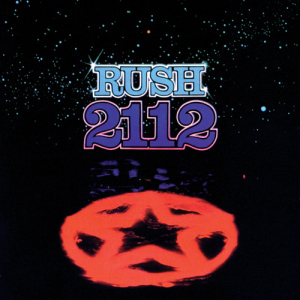
In one of the past blogs I've posted, I mentioned a Rush song called 2112, a 21 minute, 7 part song that could be a stand alone short story. It is an episodic tale of a seemingly utopian future. However, like most science-fiction books of a similar plot, the listener eventually learns that this is a dystopian future, bent on propaganda, deception, and total control. This is the general idea of the story, but the true emotions come to fruition when you listen to the song and read the story. That is why I have typed the narrated story and left a link to the song, so that you too, can achieve an elevated understanding of not only the song, but of themes, morals, plot, and other important topics regarding literature:


Song: RUSH- 2112


Included Narration:


I lie awake, staring out at the bleakness of Megadon. City and sky become one, merging 
into a single plane, a vast sea of unbroken grey. The Twin Moons, just two pale orbs as they trace their way across the steely sky. I used to think I had a pretty good life here, just plugging into my machine for the day, then watching Templevision or reading a TemplePaper in the evening.

My friend Jon always said it was nicer here than under the atmospheric domes of the Outer Planets. We have had peace since 2062, when the surviving planets were banded together under the Red Star of the Solar Federation. The less fortunate gave us a few new moons. 
I believed what I was told. I thought it was a good life, I thought I was happy. Then I found something that changed it all...

[I. Overture]


The massive grey walls of the Temples rise from the heart of every Federation city. I have always been awed by them, to think that every single facet of every life is regulated and directed from within! Our books, our music, our work and play are all looked after by the benevolent wisdom of the priests...


[II. Temples of Syrinx]


Behind my beloved waterfall, in the little room that was hidden beneath the cave, I found it. I brushed away the dust of the years, and picked it up, holding it reverently in my hands. I had no idea what it might be, but it was beautiful...


I learned to lay my fingers across the wires, and to turn the keys to make them sound differently. As I struck the wires with my other hand, I produced my first harmonious sounds and soon my own music! How different it could be from the music of the Temples! I can't wait to tell the priests about it!...


[III. Discovery]


In the sudden silence as I finished playing, I looked up to a circle of grim, expressionless faces. Father Brown rose to his feet, and his somnolent voice echoed throughout the silent Temple Hall...


Instead of the grateful joy that I expected, they were words of quiet rejection! Instead of praise, sullen dismissal. I watched in shock and horror as Father Brown ground my precious instrument to splinters beneath his feet...


[IV. Presentation]


I guess it was a dream, but even now it all seems so vivid to me. Clearly yet I see the beckoning hand of the oracle as he stood at the summit of the staircase...


I see still the incredible beauty of the sculptured cities and the pure spirit of man revealed in the lives and works of this world. I was overwhelmed by both wonder and understanding as I saw a completely different way to life, a way that had been crushed
by the Federation long ago. I saw now how meaningless life had become with the loss of all these things...


[V. Oracle: The Dream]


I have not left this cave for days now, it has become my last refuge in my total despair. I have only the music of the waterfall to comfort me now. I can no longer live under the control of the Federation, but there is no other place to go. My last hope is
that with my death I may pass into the world of my dream, and know peace at last.


[VI. Soliloquy]


[VII. Grand Finale]


It is a sad tale, inconclusive and unfulfilling. The song teaches us the importance of the beauty of life and the little details that make life worth living. It also touches on the idea of "Peace vs. Freedom", what are you willing to give up for security ("Can you put a price on peace?" (David Scott Mustaine))? Under closer examination, you may find several more themes seamlessly woven into the lyrics of the song. However, there are so many that I cannot list all of them now.


The point of this is, music and literature aren't so different after. They both tell intricate stories and include many rhetorical devices and thematic messages, and 2112 twelve I thought was the perfect song to choose to show the bridge.


FUN FACT: The reason why it's called 2112 is still unclear. Some think its the year the story takes place, while others believe it is named after the protagonist "Anonymous 2112". Some believe the name is suppose to pay homage to Tchaikovsky's 1812 Overture, and some goes as far as a conspiracy and numbers game found within the lyrics.   

Friday, October 21, 2016

Music and Literature:

by Derek Campbell

As most of us know, singer-songwriter Bob Dylan won the 2016 Noble Prize in Literature. This was a ground-breaking event, as he was the first musician to receive the award. It just goes to how people's interpretations of literature can go many ways. However, novels and poems are more closely related to music than what meets the eye. Here is a list of some famous artists with songs that were based upon books/poems:

- IRON MAIDEN:
Iron Maiden has been known to delve into books and historic events for song inspiration. Some of these include:

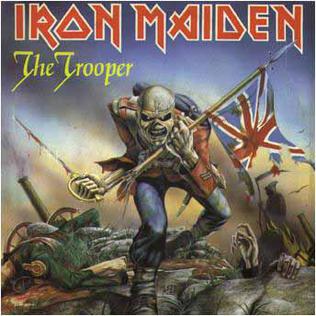
- THE TROOPER:
Released in 1983, the song is describing the Crimean War (and specifically the Battle of Balaclava). The song has also been traced to Lord Alfred Tennyson's poem The Charge of the Light Brigade, to which both describe the Brave 600 English soldiers who marched into the gruesome and brutal battle who made the decision to die for their country
Image result for charge of the light brigadeImage result for iron maiden the trooper


- BRAVE NEW WORLD:
Delving into the realm of science fiction, the main inspiration of this song was Brave New World, a 1932 classic from author Aldous Huxley. Both describe a futuristic, totalitarian pseudo-utopia/dystopia in London. Apparently, Lead singer of iron maiden Bruce Dickinson reread the book and decided to make a song about it. Fun fact, the title "Brave New World" can be traced to Shakespeare's last play ( The Tempest, 1612) "How beauteous mankind is! O brave new world, that has such people in't!"


Image result for brave new world bookImage result for brave new world album


-METALLICA:
Metallica is a heavy metal band that started in the 80's, but just because the music's loud doesn't mean there isn't meaning in the songs. Some of which include:

-ONE: 
Released on the album ...AND JUSTICE FOR ALL, this is my all-time favorite song from that album. It is a story about a soldier in war who has a mortar go off in his face. He survives, but sadly with out arms or legs and he also loses the ability to hear, see, taste, and smell. Wondering what kind of life this is, he uses morse code to spell out the words "K-I-L-L-_-M-E...". James Hetfield (guitarist, vocalist, and songwriter) based this song on Dalton Trumbo's novel Johnny Got His Gun. In fact, there is one line passage in particular that I believe represent the message of the song perfectly:

Image result for one metallicaImage result for johnny got his gun

"How could a man lose as much of himself as I have and still live? When a man buys a lottery ticket you never expect him to win because it's a million to one shot. But if he does win, you'll believe it because one in a million still leaves one. If I'd read about a guy like me in the paper I wouldn't believe it, cos it's a million to one. But a million to ONE always leaves one. I'd never expect it to happen to me because the odds of it happening are a million to one. But a million to one always leaves one. One"

-THE CALL OF KTULU/THING THAT SHOULD NOT BE:
Although these are two separate songs, they both take from the same piece of literature. Metallica has made it known that popular horror author H.P. Lovecraft was a large influence to the band, and these songs are a way of honoring the author. Both of these songs are based on one of Lovecraft's most famous novels The Call of Cthulhu. The story is about a man and his uncovering of notes about a mysterious underwater deity known as Cthulhu, and then the horror that follows. The first song (which goes by a similar title) is entirely instrumental, but the title itself reveals something. The book states that mentioning the name Cthulhu will bring him closer, which is why the "Ktulu" is purposely misspelled (for fear of the beast). The second song, Thing That Should Not Be, is paying homage to the character Cthulhu (still avoiding the word itself in the song/title). This can be seen in the main chorus of the song:

Insanity
He watches
Lurking beneath the sea
Great old one
Forbidden site
He searches
Hunter of the shadows is rising
Immortal
In madness you dwell

(the shadow rising is also based on a Lovecraft story, The Shadow over Innsmouth)


Image result for call of cthulhu novelImage result for ride the lightningImage result for master of puppet


-FOR WHOM THE BELL TOLLS
This Metallica classic is a song about the futility of war and directly relates to Ernest Hemingway's novel For Whom the Bell Tolls (which was based on a poem from 1623 by John Doone). The novel is about an American sent to take out a bridge under the control of a Fascist Army during the Spanish Civil War (which is evident in the song)
Image result for for whom the bell tollsImage result for ride the lightning


-RUSH:
Rush is oldest out of all the previously listed bands and said to be a major inspiration to them. Their songs are powerful, and usually contain something of a message ins them. Examples include:

- 2112:
This song is a seven part anthem that is approximately 20 mins long, and tells a story in different parts (much like chapters in a book). This song itself can be called a short story (as the printed version of the song contains unsung narration) and highly suggest listening to it and reading the story. This song was supposedly inspired by the novella Anthem by Ayn Rand (which tells the story of dystopian future and another dark age, similar to that in the song
Image result for anthem bookImage result for 2112


- THE STARS LOOK DOWN:
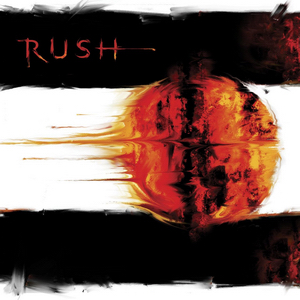
A more depressing and unsatisfying tale, this is based on the novel The Stars Look Down by A.J. Cronin. It tells the story of a pre-WW1 miner actively seeking change in his dangerous occupation, but loses hi battle for change and parliament and his wife in the process (to which the miner continues his work as a miner, defeated). This song was written by the band's drummer Neal Peart, to which he took this personally (as he had lost his wife to cancer), issuing the statement "This seemed to express a fitting view of an uncaring universe."
Image result for vapor trails albumImage result for the stars look down book


-TOM SAWYER:
This is a song based on Mark Twain's novel by the same name (really doesn't need an explantation)
Image result for tom sawyerImage result for spirit of the radio
And there are many more songs like this out their. It just goes to show you that some songs aren't just words, and that you way need to pick up a book to fully comprehend the meaning of a song...