Showing posts with label history. Show all posts

Wednesday, February 1, 2017

The Relationship of ISTOs and Classic Literature- DC

The Relationship Between ISTOs and Classic Literature

By Derek Campbell

Literature can appear in many formats as time progresses. Although literature is mainly and mostly written works, we now live in a day and age where new media outlets can express similar ideas and beliefs (such as T.V. shows and Movies). One such outlet are ISTOs (or Interactive Storytelling Outlets). This is practically a big fancy acronym meaning story-driven video games. Those who don't know much regarding the topic might believe this is mindless entertainment for middle-aged men and people with nothing better to do, but this is not necessarily the case. Of course there are video games that are simply mindless fun with no real point, but let's not generalize all games and forget about those that tell a much more linear and dramatic tale. ISTOs can include unique story-lines, use certain literary elements, and create plot-points similar to that in a book you might read. ISTOs can be shown in mainly 3 ways.


ISTOs based directly on novels:

These are the games base on a specific story (and/or stories) near verbatim. Of course there are the obvious ISTO adaptations of popular works (such as Harry Potter, Lord of the Rings, Sherlock Holmes, and A Series of Unfortunate Events adaptations). If a book series has a strong enough fan-base and is extremely successful, an ISTO adaptation is inevitable. However, there are some ISTOs that were derived from lesser known stories and series, such as the following:


The Witcher Series:

A game series that started in 2007 and continues to this day, it is a fantasy tale of magic guilds and medieval times (think of it like Game of Thrones but with more wizards). Unbeknownst to me and probably several others, it was based on a book series by the same name. Written between 1994-1999 by Andrzej Sapkowski, this 5 book saga tells the same tale as the game, just in written form. The reason many didn't know this fact was that the novel series only received a cult following in Poland (its place of origin). However, the two platforms tell the exact same stories, the only major difference between the two is that the ISTO version contains a free-roaming element that allows you to expand the story and explore the realm.


Assassin's Creed (the first game):
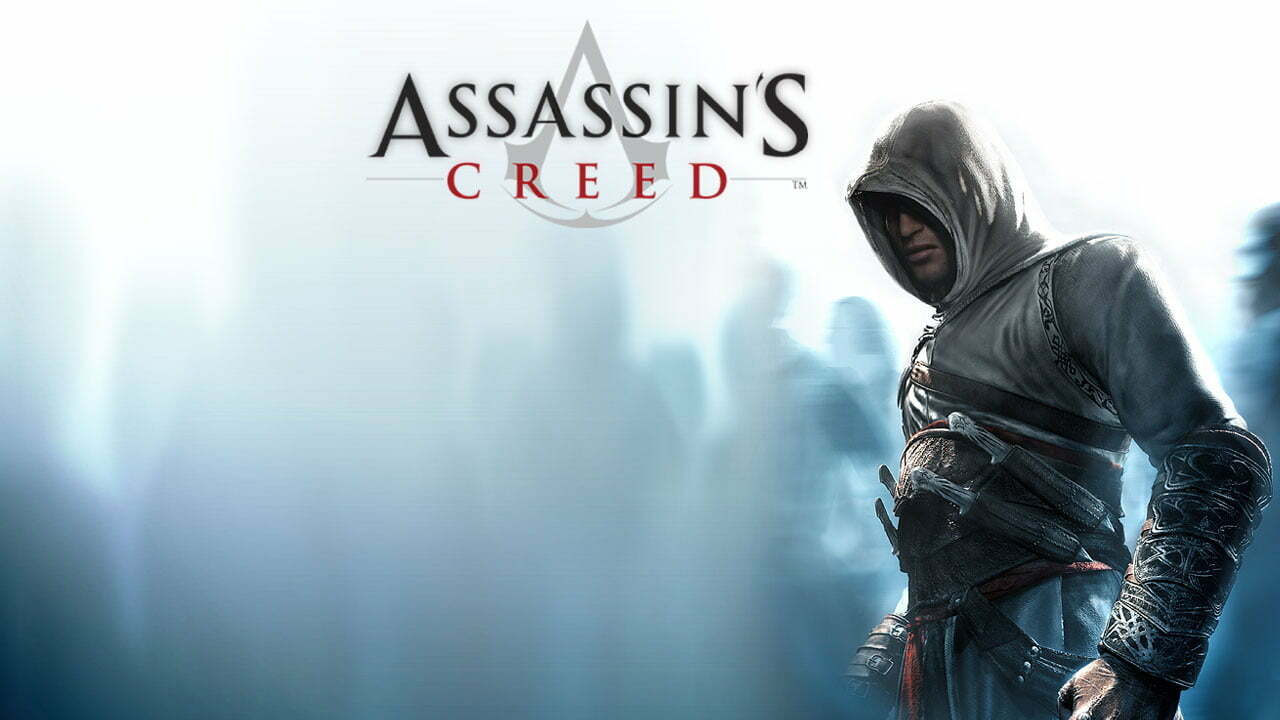
Although the game and its story is unique, most inspiration and story ideas originated from a novel (i.e. the story of Assassin's Creed is a loose adaptation). Most of the ISTO was derived from the 1938 novel Alamut by Vladimir Bartol. Rather than re-create the original story, though, Assassin's Creed took the facts and general ideas of the novel and applied then to an original story-line (much like a story to pay homage to a much older story).


ISTOs based on authors' philosophies and ideas:

Where the above takes inspiration from a single book or single saga, this category will mainly focus on adaptations from authors themselves and their ideas and collections. Most of the following ISTOs will be somewhat original and unique, but their roots can be found in the collections of a single author:


BioShock:

Where the other ISTOs where based on books directly, BioShock was founded by the principles and philosophies of novelist Ayn Rand. The main philosophy in BioShock is the idea of Objectivism (the belief that certain things, especially moral truths, exist independently of human knowledge or perception of them), which was the philosophical beliefs created by Ayn Rand herself. Although the story of BioShock was not created by Rand herself, her ideas and beliefs was the main sources of inspiration for this ISTO


The Dark Eye:

A strange and horror-filled PC game from 1995, the style and main story originates from the king of horror and gruesome tales (or at least in my opinion), Edgar Allen Poe. The ISTO allows the player to explore multiple POVs of three separate Poeian tales: The Tell-Tale Heart, The Cask of Amontillado, and Berenice. Although the stories are exactly the same, the interesting the thing regarding this ISTO is the fact that you can explore multiple POV of the stories, introducing the player to different outlooks and ideas about each different tale

Independent ISTOs:

In my opinion, there are some stand-alone ISTO series that creates an entirely unique story-line that should have stories written about it.  Most commonly in the RPG (Role-Playing Game) category, these ISTOs create stories and plots that could make pretty good books to read. These games use most literary elements and expand on literary devices to further enhance a story (including themes, mood, and dialogue/narration explaining the story as you progress). These include such titles as Earthbound, Chrono Trigger, and Final Fantasy (to name a few). These titles are not any different from previously listed titles, the only difference is that these titles created their own stories rather than utilize a pre-existing novel


Conclusion: 

Although some games are just for the purpose of mindless fun and a detachment from real world problems/issues, ISTOs are more complex than what meets the eye. They tell stories and possibly even inspire some to read the book it was based on. Its like watching a good movie, finding out there's a book, and feeling further inclined to read said book. ISTOs produce not only an incentive to read the source material, but also teaches us the ideas of story elements and literary devices on mass media outlets


Thursday, November 3, 2016

How to Understand and Enjoy Greek Literature by Madison Levinson

Greek literature can be very difficult to read and therefore even more difficult to enjoy. Recently, in class, we read The Iliad by Homer. Although we did not read the entire epic, the books we did read of it were frustrating to understand and unpleasant to sit down and read. This left many people procrastinating reading it and put off the reflection questions until the night it was due. Students were scrambling for important quotes and asking others for their interpretations of the text. However, using the rest of this article on how to understand Greek literature, this last minute fright will be a thing of the past...almost as far in the past as the literature you will be reading!

Homer, author of The Iliad 
Since I have personally read The Iliad I will use that epic as an explanation for all of my tips and tricks. But first I will provide a brief explanation of The Iliad for those who have not read it, I wouldn't want anybody to be lost in an article about not getting lost while reading a text!

The Iliad was composed around 800-725 BC, and written by Homer anytime from 725-625 BC. The Iliad is the story of the final weeks of the Trojan war and the Greek siege of the city of Troy. The text follows characters such as Achilles, Agamemnon, Hector, Athena, Aphrodite, Apollo, and Hera. The Trojans and Greeks were fighting because Helen of Troy ran away with Paris, leaving the Trojan King with no wife, locking Troy and Greece into a war of seemingly no end. The poem follows the warriors and their decisions with the influence of the Gods while also teaching valuable lessons to the reader. So how did I figure out all of this information from the impossible epic? Well I am here to show you.

Step 1: Know who's who

An artist rendition of Helen of Troy, the cause of the Trojan War
The first step to understanding any difficult literature is understanding who you will be reading about. In The Iliad there were countless characters to keep track of and various spellings and nicknames for everybody. At the beginning of the book I made a character outline of each person and their relationship to one another as well as if they were Greek or Trojan. For example, Achilles, the Greek, was a warrior who hated the Trojan, Hector, for the murder of Patroklos, the best friend of Achilles. This connects three seemingly random characters to one another and explain their interactions with one another. Keep this character chart with you at all times to refer back to and refresh your memory.

Step 2: Know what you are reading

The second step to understanding difficult literature is to understand what you are actually reading. In The Iliad there are numerous rants and descriptions that can get somewhat lengthy and confusing. Often, I didn't know where the description ended and the actual story began. To prevent this confusion, it is beneficial to read a short summary of the story, like Spark Notes or Cliff Notes. By reading a summary of Spark Notes and then going back and reading the actual literature I had an idea of the chronological order of the story. Any interjections or descriptions were clear as to their end point and I was clear when the actual story picked up again.

Step 3: Do not focus too hard

The third step to understanding difficult literature is not to get caught up on all of the little details. In The Iliad it can be hard not to focus on every little word or every little sentence. It seems like every letter is somehow significant or meaningful. Greek literature is in fact no different than literature we read today. When reading a book do you take notes on every sentence and remember every line of dialogue? So why should you have to for Greek literature? There are often frivolous rants a character will have with themselves, gods, or other mortals. Not all of these sentences are important and necessary to the development of the story. Approach Greek literature as you would any other text and just read, don't worry about a sentence that may seem vague or obscure.

Greek literature does not have to be frustrating and difficult. The story lines are often full of plot twists and dynamic relationships between characters, making it an overall fascinating read. With these tips any reader can find the excitement in Greek culture and classics.

Wednesday, November 2, 2016

The Alchemical and Rosicrucian Compendium and Rosicrucian Mythology by Simon Levien


The Rosicrucian order is an organization that spans nearly 20 languages and operates internationally--you would assume by its intercontinental nature it's an NGO. Instead, this organization is among the unconventional and the bizarre. The Rosicrucians are members of a fraternity/secret society known as Rosicrucianism. The fraternity, Rosicrucianism, is a philosophical and religious group sharing elements of mythology, alchemy, Christianity, and of course, with all secret societies, a relation to the Freemasons. Their symbol is the rosy cross (pictured below) and is designed in the drift of hermeticism--a series of esoteric religious beliefs founded upon the writings of Hermes Trismegistus, a mystic who is responsible for studying and expanding astrology. However unlike other modern clandestine fraternities, Rosicrucianism places a heavier emphasis on mythology. Rosicrucians focus on the idea of self in their religious studies along with the spiritual combination of mythological creatures and their influence in life. At its core, Rosicrucianism is a syncrestic religion, meaning it draws from multiple other religious beliefs. However, the monsters the traditional Rosicrucians believe in are original to the Rosicrucianism.

The Rosicrucian mythology is held within a 1760 manuscript-anthology known as The Alchemical and Rosicrucian Compendium crafted by an unknown author in the transient period before the French Revolution where Robespierre's Cult of the Supreme Being, an enlightenment-era philosophical and religious movement (if anyone still remembers from world history last year), would take inspiration from.
The manuscript contains colored sketches of two-tailed lions, a dissected dragon, three-headed mystical pythons, etc. Its difficult to put into words the nature of these beings. Pictured below are four of these bizarre creatures. 

Most people are accustomed to traditional mythologies (Greek, Roman, Egyptian, etc.) however upon viewing of the mythological creatures in this compendium, the differences between esoteric cultures and more studied and practiced religions become definite. Take Hercules' Hydra in Roman mythology for example. Everyone has heard of the Lernean Hydra and how it was one of Hercules' (or Heracles as the Achaeans referred to him) 12 labors. Hydra, the multi-headed, fire-breathing dragon is a classic and simple myth. In contrast the occult Rosicrucian "python" (see picture) is completely absurd (and that is certainly the most ridiculous of the images in the compendium that I could find). It looks as if a child drew it taking inspiration from his/her creative daydreams. However, these absurd other-worldly creatures have yet to be substantiated by the Rosicrucian Order for the knowledge of nonbelievers looking in. Instead, the Rosicrucians that remain (there are few in number, Rosicrucianism's hay day of the 18th century is long gone) point towards the Rosicrucian sacred texts such as The Alchemical and Rosicrucian Compendium. These Rosicrucian writings open a Pandora's box of arcane and outlandish beasts. Many of these monsters and myths have fallen away into the obscurity of an obscure cult. Yet, these monsters still hold to be venerable and historic symbols for thriving Rosicrucians today. 


(Sorry for how the pictures are strewn, I can't seem to format the pictures properly.)