Showing posts with label psychology. Show all posts

Saturday, April 1, 2017

Why Standardized testing is far from pleasant- DC

Why the Useless PARCC Test is Odious and Vile (with Scientific Backing and Logical Reasoning)

By Derek Campbell

In this day and age, whether you are a parent, teacher, or student, the unholy phrase "Standardized test" sends shivers down your spine. It causes unnecessary stress and hinders class-time for learning an actual lesson, which is ironic considering the fact that main point of school is to teach. However, the real-backstabber is the fact that unlike the SAT and ACT (which plays a major role in the transition between high and college), the PARCC test means next to nothing for the student's academic future, and here's why...
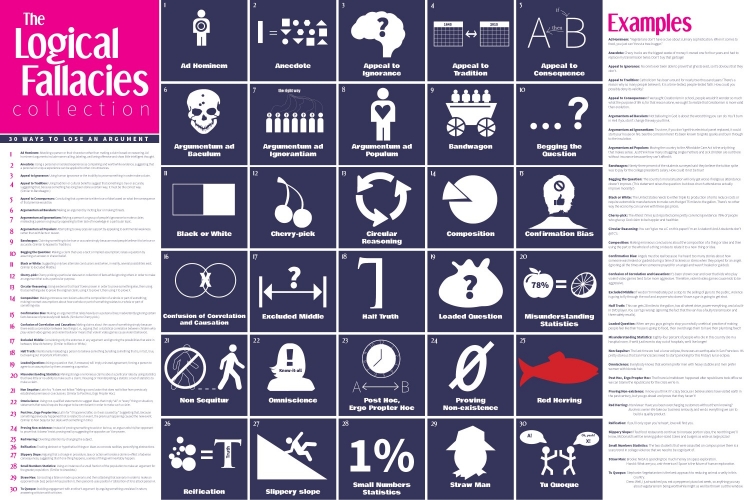

Logical Fallacies:

While researching, I decided to go straight to the source, the home-base parcc.gov. Within it I found this broad and boisterous claim: "Recent independent studies have found PARCC aligns to the standards and assessment criteria that matter most"(parcc.gov). However, I was not able to find a definition for the phrase "criteria that matter most" anywhere on the website. So I ask you, what academic criteria matters the most? If I were to respond to that question, I would say that the information that will propel you furthest in life would be most important (which means information regarding basic human interactions, finances, and general information regarding the occupation you choose). Yet, almost every question I received was reading analysis of fictitious or vague historical stories (which does not help me very much in my aspirations of the science field of work). But I digress...
Curious to know what independent studies were taken, I continued searching around the official website. "A string of studies in late 2015 and early 2016 have shown that PARCC is an effective test"(parcc.gov). The PARCC test was introduced in NJ two years ago, to which I took it in 8th grade as sort of "trial period". What I'm pondering is this: What accurate studies can be taken in a year? To put it in perspective, when the idea smoking was introduced, no one had truly questioned it until the mid-20th century. Although dramatic, the point I'm trying to make is this, you can't make accurate studies in less than a year, especially for when it deals with college success (considering in NJ, no one in college has even taken the PARCC except this year's freshmen, which is too early in college to make a discernible decision regarding the test).
My final rant is another independent study found on the website, which reads: "In November 2015, Mathematica Policy Research reported that PARCC is a strong predictor of success in college, and a Massachusetts Department of Education report found that PARCC assesses the skills that matter most"(parcc.gov). This single quote contains all arguments previously mentioned: the idea that accurate studies about the long-term future can't be made in a year, (at least in NJ) no one currently in has even taken in aside from the freshmen, and the question of "what is academically important" is ambiguous.
The above does not even cover the fact that only 18% of the country takes this exam (only 9 U.S. states, NJ included), or that the PARCC corporation is independent from any state or federal board of education (which pulls into question their knowledge of proper educational practices, the accuracy of their statistics, and their contractual obligation to creating and maintaining a a standardized test for the future benefit of our children).


Scientific Reasoning

One thing that I would like to point out the most; If you're not the greatest at English or Math, you are by no means automatically imbecilic in anyway. However, based upon the Common Core System based PARCC test, we are forced to test in areas we may not excel in, showing inaccurate results of intelligence. I'm no Bill Shakespeare, so half of this PARCC test doesn't even show what I'm good at.
There are also neurological studies that link emotions to mental capacity and cognizance. To quote from pbs.org:
"When we’re in a positive mood, for example, we tend to think more expansively and creatively. When we feel anxious—for instance, when we’re about to take a dreaded math test—that anxiety uses up some of the working memory capacity we need to solve problems, leaving us, literally, with less intelligence to apply to the exam." (pbs.org)
In order to show the complete mental capacity we have, we would have to be having the best day in the world without any stress (and "Standardized Test" is practically synonymous with stress). This leads into my next point, Stress. There are several neurological studies showing that increased amounts of stress is not healthy for the brain, and that "Chronic Stress Can Damage Brain Structure and Connectivity"(psychologytoday.com). The purpose of a test is record our knowledge on a topic, not to deteriorate our mental state, so why create more tests to worry about (i.e. PARCC)


Practical Issues

Aside from the mental affects, there are also several problems on how the test is conducted and maintained (coming from someone who has just experienced these issues). Firstly, there is loss of class time. The purpose of every class is to teach the students important lessons and skills/abilities that they will use in college and for the rest of our life. What doesn't make sense is taking a test that will "predict" how good we do in college instead of learning to better prepare us for college. There is also the aspect of stress and the amount of tests a high-schooler takes. We already have course finals, as well as the PSAT, ACT, SAT. The difference between these tests and the PARCC is the fact that previous tests actually matter for something (and will have severe consequences for not doing well). I've already mentioned the affect of stress on the mind, and how tests for highs-schooler is the epitome of stress. There is also the risk of computer malfunction/issues (whether it be console itself or the program). I'll be the first to admit, while I was taking PARCC, I had accidentally kicked the surge protector, turning off at least 3 adjacent computers (to which we all had to turn on the computer and reboot the program, wasting about 10 mins of testing time). The point is that accidents like these can happen very easily and is a nuisance to deal with while taking the test. There is also the idea that no program is truly safe from hacks, malware, or simple glitches (and considering this is a newly imposed test, bugs are definitely waiting to be found).

I have discussed the PARCC test with several students (who unanimously agree that it sucks), parents (who are definitely not a fan), and even teachers (who shall remain nameless for privacy reasons). So I ask, why do we even have the PARCC test, anyway? Nobody likes it, it has several flaws and has negative effects on the test-takers. And yet, the corporation received a $186 million grant from the government (and more than 80% of states don't even take the test). PARCC, why?

Useful urls (+sources):
http://www.pta.org/programs/content.cfm?ItemNumber=1724
http://www.nj.gov/education/sca/parcc/
http://www.parcconline.org/about/the-parcc-tests
http://www.parcconline.org/assessments/test-design/independent-studies
http://www.parcconline.org/about/states
https://en.wikipedia.org/wiki/PARCC#Historical_background
http://www.pbs.org/wgbh/nova/blogs/secretlife/blogposts/the-science-of-smart-eight-ways-of-looking-at-intelligence/
https://www.psychologytoday.com/blog/the-athletes-way/201402/chronic-stress-can-damage-brain-structure-and-connectivity 

Tuesday, November 22, 2016

The Psychological Effects of Reading

-By Derek Campbell

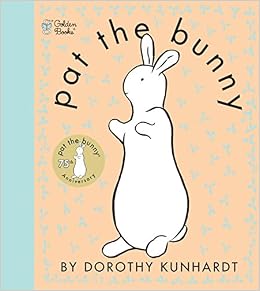
Reading is a basic human activity taught to us at an extremely young age. It can teach us basic morales, lesser known historical facts, how to control the world, etc. It doesn't matter if thou wisheth to quoth a quote from the  tale of "The Raven", nor does it matter to perhaps embark on the perilous and dubious adventure of "Pat the Bunny", all literature has meaning. Most of us can see this point plain and simple. However, there lies a much larger effect on your cognitive ability than what meets the eye. Not only does all literature have meaning, but all types of literature have specific physiological and psychological effects as well. It's time someone ought to tell you what's going on up there when you read:

Positive Effects:
Reading for the most part is good for you (that's a no-brainer), but what you haven't realized is actually how good it is for you:

Well, for starters, it's an incredible stress reliever. A 2009 University of Sussex conducted an experiment and concluded that the reading for a half an hour was more effective than listening to music, drinking tea, or walking. The studied showed that a person's stress level reduced by 68% (compared to 61% for music, 54% for tea, and 42% from going on a walk, data collected from theargus.co.uk).

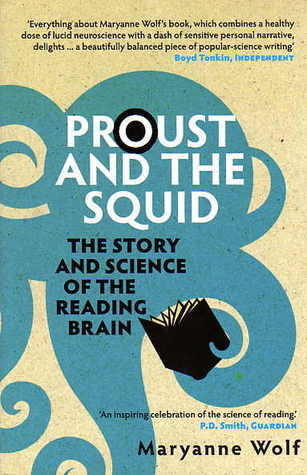
Also, there is a debated theory regarding reading's role in the evolutionary process. Dr. Maryanne Wolfe wrote a book Proust and the Squid, to which she explains her theory that the invention of reading prompted the human mind to think differently, taking in information in a way that increased the average human intelligence. Although the theory has been unconfirmed, the scientific community has taken it into thought. I find it pretty funny to think of this theory in these terms: "Pat the Bunny is a human invention to perfect the evolution of the human cerebrum".

What if I told you secretly and almost unconsciously made an involuntary movement and/or reaction just from something like a metaphor. This isn't The Number 23, and you are not Jim Carrey, this is real (and personally a little spooky too). A recent study has yielded these results:                                
              
                   "In an interesting recent study conducted by Simon Lacey of Emory University and his colleagues they chose sentences that contained tactile metaphors—such as “She had a rough day”—and paired them with sentences with the same meaning but without the metaphors, such as “She had a bad day.” Participants lay in an fMRI scanner and listened to the various sentences. The researchers found that the brain regions that were activated when the participants heard sentences with texture metaphors were the same brain regions that are activated when people sense texture through touch" (huffing post)

Although it isn't mind control (at least not yet), science has shown us that what we read triggers something internal, even if when we don't consciously feel the effects. Nevertheless, this sounds utterly amazing, as well as terrifying as this could be the secret to brain-washing or hypnosis (the power of words is a force to be reckoned with)


Negative Effects:
You may be wondering, "What's so bad about reading?", and to be perfectly honest, not much. However, I believe nothing is without a second face, and behind the printed pages, there is a darker agenda:

One word, propaganda. When authors and poets write, they usually do so to push a certain message, morale, or even specific agenda. An author can write nearly anything and hide it in a satirical or allegorical form, almost forcing a person to subconsciously agree with the author. Just look at pieces such as The Crucible (Red Scare), Animal Farm (Anti-Communist Ideas), and all political cartoons. Hell, look at all the Donald Trump and Hillary Clinton memes circling the internet, subconsciously creating bias opinions about of the two. Why is this a big deal? It's all about truly knowing what you're fighting for. The German citizens in the 1930's wanted a stronger Germany after WW1, do you really think all wanted to sign up for the mass genocide of jews as well, or do you think they were coerced by propaganda-like media (such as novels)?

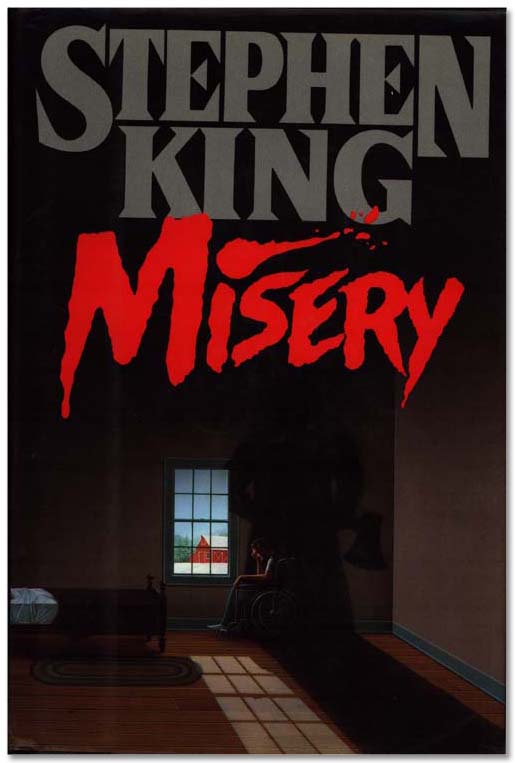
Not to mention the fact that similarities can be drawn between intense fictitious reading and drug use. That may sound extreme, but if you examine both, they seem closer related than what you previously thought. Why some (if not most) alcoholics or hard-core drug users is to escape reality and escape the harsh and punishing world around them. People can also do this with works of fiction. Although one clearly has much more severe consequences, it is the urge to escape reality that relates the two. It's one thing to read and enjoy a story, its another to close off your own life for one of dead trees. We should not turn a blind-eye to what is important in life. We wouldn't want to turn into Annie Wilkes now would we (Misery, Stephen King)?

Wednesday, November 9, 2016

Archetypes in Psychology by Carly Piniaha

     An archetype is a symbol known universally. All humans have symbols they associate with feelings; light symbolizes safety while darkness symbolizes danger. Archetypes can also be used for the human psyche. Psychologist Carl Gustav Jung proposed each human psyche was composed of three parts; the ego, the personal unconscious, and the collective unconscious. The ego represents a conscious state of mind and the personal unconscious represents all memories, suppressed or not. Collective conscious, he theorized, was the human species collective memories and experiences that was a part of everyone psyches. Jung believed within the collective unconscious existed archetypes. All the people in the world display several main behavioral archetypes, though one is more dominant than others. Jung identified four major archetypes; the self, the shadow, the anima (or animus), and the persona.


The Self
Often described as the god of the archetypes, the self is seen as the connector of all other parts of the psyche. All other elements are subordinate to the self. This archetype acts as the moderator between feelings and impulses. The self holds the balance between the shadow and the persona, the good and the bad within a person. While other archetypes are hidden the self is projected in ones outer personality.


The Shadow    The shadow embodies the chaos and wildness in a person's character. Because of this chaos the shadow tends to pull someone to not obey the rules. Inner fears and thoughts are held within the shadow and are often suppressed by the individual. Just as the name implies the shadow is always looming over a person projecting chaos on their decisions.


The Anima or Animus

The anima is ones true self that not most see. While women have an anima, men have an animus which is more or less the same thing. Jung believed men had one dominant animus while women were more complex and had more parts to theirs. Men's animus were believed to be contributed by the women in their family. Women's on the other hand could come from multiple variables in the person's life. The Anima is believed to be the archetype that connects a soul to the collective unconscious.


The Persona

     The persona is how a human represents themselves to the world. deriving from the Latin term, persona literally means "mask". The persona's main purpose is to protect the anima. This archetype hold more than just one mask but rather dozens depending on the surrounding people.