Thursday, February 2, 2017

When Does a Person Truly Die? (By Eve Curras)


Related image
I am the absolute worst 
at comforting people.  I 
remember once my friend was having a panic attack.  Her head was between her knees and she clutched her heart as she desperately attempted to catch her breath.  I was completely out of my element.  Not knowing what to do or how I could help, I patted her back awkwardly for several minutes.  I didn't truly know why I believed patting her back would somehow help-- I just thought that's what people normally do in those type of situations.  My attempts at comforting her didn't seem to be helpful in the slightest, so I proceed to stare at her until she calmed down.  She turned to me, her face flushed and contorted with tears, "what are you doing?"  she asked me.  


     "Umm..."  I was in a compromising position.  She was still visibly upset and I didn't feel it would be appropriate at that point in time to explain to her that this whole "people thing" didn't always come naturally to me.  "I was... trying to help?"

     "Well, stop staring at me like that," she said, her face still wet with tears.  I have been in many other similar situations.  I remember long ago a different friend of mine was crying because her brother had put her in a choke hold.  I was younger and less mature then but as she clutched her neck, sobbing on the floor, I started laughing!  This isn't to say that I'm some sort of sociopathic robot, but in any situation that involves tears I am completely ineffective.  

     This brings me to my real story.  I was faced once again with my achilles heel of situations, another crying friend.  Her father's best friend had just recently died and she tearfully explained to me that she felt her father had become closed-off and depressed.  Despite my empathetic nature, my stoic stare was present as always.  I couldn't think of the right thing to say, knowing fully well that sometimes there never is.  Luckily, a friend of mine who can actually process human emotion sat with us.  His face was kind and laced with a sympathetic smile as he diligently listened to everything she said.  "Let me tell you something,"  he said to her calmly.  She wiped the tears from underneath her eyes.  "There's an old saying.  I can't remember who said it, but it was along the lines of:

     They say you die twice. One time when you stop breathing and a second time, a bit later on, when somebody says your name for the last time.

     All you can do to honor the death of your father's best friend is never forget his memory.  Hold it close to your heart and never let him die that second death."

     I was astounded by the complexity and beauty of what he said.  I later looked into the quote and discovered it was said by a famous street artist from England by the name of Banksy.  The name was very familiar and it was then I remembered watching a documentary about Banksy with my parents when I was much younger called "Exit Through the Gift Shop."  I found myself spending a great deal of time analyzing this quote and how true it was.  There will come a point in time where all of us will be dead.  It is a scary thought but true nonetheless.  Unless you possess what society deems as a great significance, your name will be forgotten just as millions of others have.  Shakespeare, Martin Luther King Jr., Albert Einstein, Napoleon, and so many other icons have died yet still live on in the minds of the living.  To me, it was an amazing concept, realizing that some people were immortal. 

     My grandfather died last year.  It was a shock to my entire family and very sudden.  I can still remember every single detail of that day, the day my father came home and he told my brother and me.  Up until then, I had never had a reason to despise death.  Death was such a foreign feeling to me, and flying to Puerto Rico for my grandfather's funeral and looking at his chair- realizing I would never see him sit in it again, terrified me.  I hold this saying close to my heart because I'm scared to do anything less than that.  I know that someday my grandfather will be forgotten, when my family has passed and my children and grandchildren have.  We will all simply become specks on a family tree, but somehow I find that comforting.  It makes life easier, to realize that someday, I too will be forgotten.  It makes me appreciate how short our time on this earth is and realize how important it is to live a life for yourself and those that love you.  I know I'll never again get to see my grandfather sitting in his brown, rugged chair in the living room, where the sun shone brightly through the glass door panels and the gentle, comforting sound of the air conditioner filled the room with a soothing hum.  My grandfather may have died his first life, but so long as I am alive, I will never let him die the second.

Wednesday, February 1, 2017

The Relationship of ISTOs and Classic Literature- DC

The Relationship Between ISTOs and Classic Literature

By Derek Campbell

Literature can appear in many formats as time progresses. Although literature is mainly and mostly written works, we now live in a day and age where new media outlets can express similar ideas and beliefs (such as T.V. shows and Movies). One such outlet are ISTOs (or Interactive Storytelling Outlets). This is practically a big fancy acronym meaning story-driven video games. Those who don't know much regarding the topic might believe this is mindless entertainment for middle-aged men and people with nothing better to do, but this is not necessarily the case. Of course there are video games that are simply mindless fun with no real point, but let's not generalize all games and forget about those that tell a much more linear and dramatic tale. ISTOs can include unique story-lines, use certain literary elements, and create plot-points similar to that in a book you might read. ISTOs can be shown in mainly 3 ways.


ISTOs based directly on novels:

These are the games base on a specific story (and/or stories) near verbatim. Of course there are the obvious ISTO adaptations of popular works (such as Harry Potter, Lord of the Rings, Sherlock Holmes, and A Series of Unfortunate Events adaptations). If a book series has a strong enough fan-base and is extremely successful, an ISTO adaptation is inevitable. However, there are some ISTOs that were derived from lesser known stories and series, such as the following:


The Witcher Series:

A game series that started in 2007 and continues to this day, it is a fantasy tale of magic guilds and medieval times (think of it like Game of Thrones but with more wizards). Unbeknownst to me and probably several others, it was based on a book series by the same name. Written between 1994-1999 by Andrzej Sapkowski, this 5 book saga tells the same tale as the game, just in written form. The reason many didn't know this fact was that the novel series only received a cult following in Poland (its place of origin). However, the two platforms tell the exact same stories, the only major difference between the two is that the ISTO version contains a free-roaming element that allows you to expand the story and explore the realm.


Assassin's Creed (the first game):

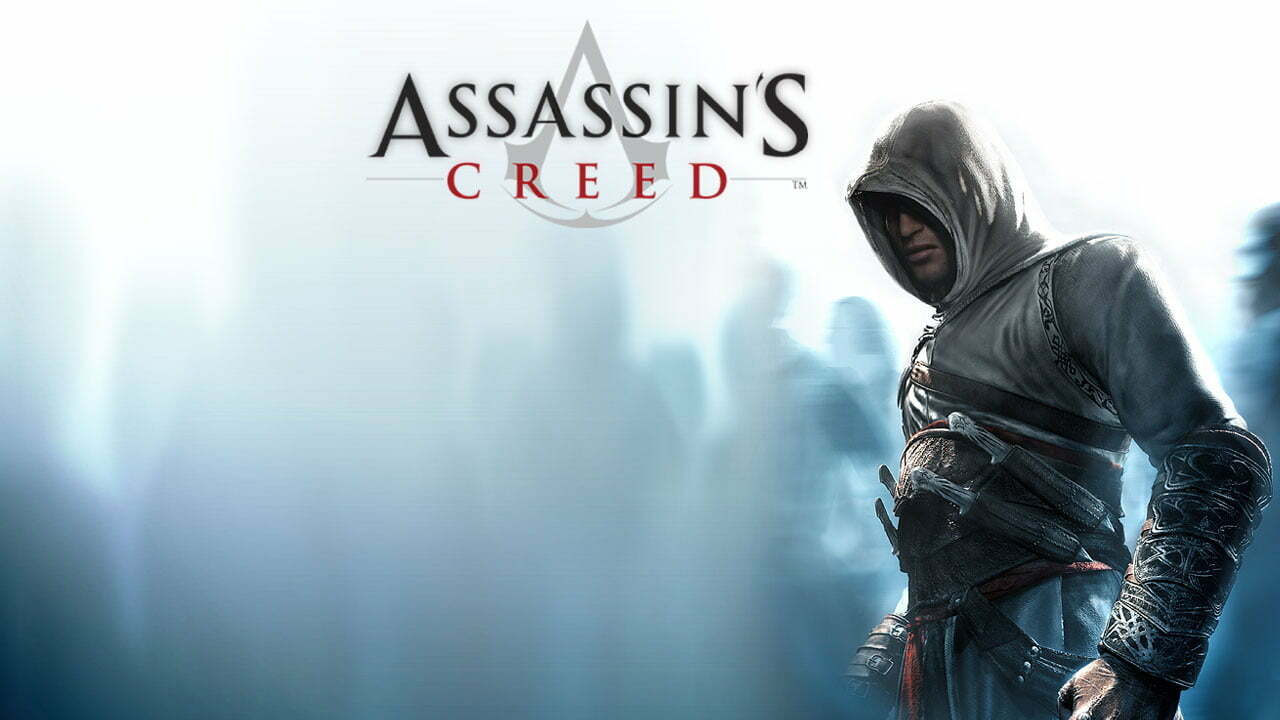
Although the game and its story is unique, most inspiration and story ideas originated from a novel (i.e. the story of Assassin's Creed is a loose adaptation). Most of the ISTO was derived from the 1938 novel Alamut by Vladimir Bartol. Rather than re-create the original story, though, Assassin's Creed took the facts and general ideas of the novel and applied then to an original story-line (much like a story to pay homage to a much older story).


ISTOs based on authors' philosophies and ideas:

Where the above takes inspiration from a single book or single saga, this category will mainly focus on adaptations from authors themselves and their ideas and collections. Most of the following ISTOs will be somewhat original and unique, but their roots can be found in the collections of a single author:


BioShock:

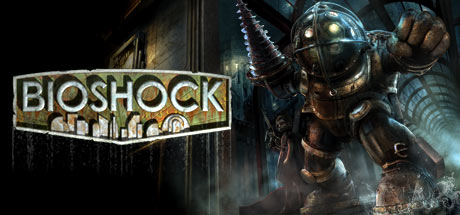
Where the other ISTOs where based on books directly, BioShock was founded by the principles and philosophies of novelist Ayn Rand. The main philosophy in BioShock is the idea of Objectivism (the belief that certain things, especially moral truths, exist independently of human knowledge or perception of them), which was the philosophical beliefs created by Ayn Rand herself. Although the story of BioShock was not created by Rand herself, her ideas and beliefs was the main sources of inspiration for this ISTO


The Dark Eye:

A strange and horror-filled PC game from 1995, the style and main story originates from the king of horror and gruesome tales (or at least in my opinion), Edgar Allen Poe. The ISTO allows the player to explore multiple POVs of three separate Poeian tales: The Tell-Tale Heart, The Cask of Amontillado, and Berenice. Although the stories are exactly the same, the interesting the thing regarding this ISTO is the fact that you can explore multiple POV of the stories, introducing the player to different outlooks and ideas about each different tale

Independent ISTOs:

In my opinion, there are some stand-alone ISTO series that creates an entirely unique story-line that should have stories written about it.  Most commonly in the RPG (Role-Playing Game) category, these ISTOs create stories and plots that could make pretty good books to read. These games use most literary elements and expand on literary devices to further enhance a story (including themes, mood, and dialogue/narration explaining the story as you progress). These include such titles as Earthbound, Chrono Trigger, and Final Fantasy (to name a few). These titles are not any different from previously listed titles, the only difference is that these titles created their own stories rather than utilize a pre-existing novel


Conclusion: 

Although some games are just for the purpose of mindless fun and a detachment from real world problems/issues, ISTOs are more complex than what meets the eye. They tell stories and possibly even inspire some to read the book it was based on. Its like watching a good movie, finding out there's a book, and feeling further inclined to read said book. ISTOs produce not only an incentive to read the source material, but also teaches us the ideas of story elements and literary devices on mass media outlets


Tuesday, January 31, 2017

What's So Special about Turning 16? by Chloe Caldi

One thing that the entire world has in common is that as another year goes by, each individual grows a year older. Many choose to celebrate their birthdays, either by simple or extravagant means. However, there are a couple of years where a particular birthday is more special than the rest. One of the biggest birthdays of them all is turning 16 years old, especially for girls. Girls who can afford it choose to have a huge fancy party, called a Sweet Sixteen, where thousands of dollars are spent, and family and friends are invited to celebrate with the birthday girl. One thing I have always wondered is, why spend so much money on one day? What's so special about turning 16?
Now believe me when I say I get the appeal to having a big party. I love dancing and spending time with family and friends as much as anyone. In fact I'm going to be 16 myself in a matter of three days (although I won't be celebrating in such high fashion). However, I have failed to see the significance of the age 16. You can't drink, or drive. You aren't of legal age. You are still in high school. I have conducted some minimal research (asking my mom and googling "sweet sixteen significance"). What I have learned is that turning 16 is more a coming of age commemoration than anything else.
So, I have decided what is so special about turning 16. It can be hard to remember how many people you have to be grateful for throughout the sometimes overwhelming and busy thing that we call life. I believe that turning 16 is a time that the family and friends gather around to appreciate the birthday girl or boy, and recognize the step that they are taking into adulthood. While turning 16 may not legally allow for any more freedom, it is a milestone in a teenager's life that deserves to be acknowledged. 
The 16th birthday has always been a huge tradition in American culture, similar to how turning 15 is a huge milestone in Hispanic culture. Many people consider it the day that signifies a girl becoming a woman. The maturity of a young girl supposedly grows enough to be considered a woman by 16. Many traditions represent this change during a sweet sixteen party. Some include the changing of the shoes, in which a sneaker is traded in for heels, and the father daughter dance. A candle lighting ceremony is also a common practice at a sweet sixteen. It is an opportunity a girl uses to thank all of the people closest to her who have enhanced her life greatly. This is my personal favorite tradition surrounding a 16th birthday.
No matter how you celebrate, turning 16 is a meaningful day in your life, and you deserve to enjoy the day in whichever way you please! I am personally so excited for my 16 birthday, three days from now, and I can't wait to spend the day with my friends and family!
Image result for sweet 16

My Experience at the Women's March on Trenton by Sylvia Kloian

Exactly 10 days ago, on January 21st, 2017, I attended the Women's March on Trenton, held in our state's capitol. Now let me get a few things straight: the March was not a protest, it was not violent, and it was in no way destructive. In fact, no arrests were made at any of the marches. On the Women's March website, you can find their mission statement, which basically says that we march to fight discrimination against someone due to their gender, race, sexual orientation, citizenship, or physical ability. It also references climate change and a women's right to control her own body. These all happened to be issues that I find extremely important, and all issues that Donald Trump is challenging. So that is why, on the first day of his presidency, over 6,000 men, women, and children took to the streets in Trenton in solidarity against racism, sexism, homophobia, xenophobia, and more. In Washington D.C. there were about 450,000-500,000 people in attendance, and even more in L.A. (750,000!). Before and after the Trenton March, there were over 20 wonderful speakers. Some of the most memorable were Congresswoman Bonnie Watson Coleman, the march's organizer Elizabeth Meyer, and Ruth Savage-Jennings (who has been an activist since she was 14 and was a friend of Martin Luther King Jr.). There were so many others, including LGBT, Muslim, Jewish, and Christian persons. There were also several high school students who spoke. This had to be the most inspiring part of the entire experience. There were 2,900 seats inside, but the rest of us were stuck listening in on the speeches from speakers outside on the stairs of the War Memorial. Everyone was huddled together, holding a multitude of signs, and cheering along together at each speech. I cried listening to all these strong women talk about their accomplishments and about overcoming prejudice and sexism. Finally, I, too, was part of discussions that are rarely had in school or even at home. It's so exhausting to have to sit around while all around you people are trying to tell you what you can and can't wear, what you can and can't talk about, and what you can and can't do with your body. Especially in this election, I've had to pick and choose my battles, and held my tongue sometimes when I've heard someone say something that I think is wrong. And, frankly, I'm tired of holding my tongue. The truth is, most others don't have to. I've noticed that when a man talks about politics, people just say they're sharing they're opinions, but when a woman talks about politics, people say that they're "triggered" (a word that is now often used by many my age to dismiss people expressing actual concern) or being a "bitch". And you may have a different opinion than this, but this is something that I have personally witnessed and experienced. So, because of this, marching was such a healthy way to surround myself with people who respect me and my opinions, and to finally cease "staying quiet". The power of knowing that I was marching with dozens of other sister marches in the U.S. and on every other continent (including Antarctica) was amazing and life changing. I am so, so, so, grateful that I got to be a part of this; one person in a sea of millions who made history by marching for what they believe in.

Monday, January 30, 2017

Why you Shouldn't Procrastinate by Emma Bova

        As a habitual procrastinator, I've learned over the years that putting things off until the last minute is not always best. In fact it might just lead to you wanting to pull out all your hair and having a mental breakdown a twelve o'clock A.M. while you're struggling to finish all of your assignments that you've been completely and utterly aware of for at least two weeks. At the time, you may think something like "eh, I'd rather watch Netflix," or "eh, its not even due tomorrow anyway," however, when the night that you need to buckle down and finish your work comes, you end up having a panic attack and wish you had just gotten the assignment over with (currently what I am doing at this very moment in approximately four classes). So, if anyone needs some helpful tips on why procrastination is the origin of all evil, read below :).
        If you're typing an essay, ideas probably won't automatically start flowing onto the keyboard; you're going to need some time to plan your essay and gather details to make your essay the best it can be. If you put a writing assignment off until the last night possible, it might take awhile to think of an idea or a topic, lessening your time to actually type it even more. Additionally, the less time you have to finish an assignment, the more rushed the assignment will feel to anyone who is reading it. That is why taking time to plan out an essay is always best; save the last night for last minute revisions to make sure there are no grammatical or spelling errors.
        You could run out of time! Nowadays in our technologically advanced world, many classrooms use google classroom, which is essentially a website by google that allows teachers to post assignments for students online, and set them due for a certain date and time, so basically a classroom online (hence the obvious name). Remember back in middle school when, if you forgot to do your homework the night before and you were afraid of getting your butt whooped by the teacher your were terrified of (cough, Mr. Pergola), you'd simply do the homework during lunch and nobody would ever know that you didn't actually do it the night before, but now, if the work is turned in past seven o'clock A.M. it's late. No going back now. You just have to sit in a pool of your own shame and there is absolutely nothing you can do about it. Big thank you to whoever created google classroom (not against saving paper, but it makes life very difficult at times).
        Two words: sleep deprived. Now, many teens are sleep deprived for other reasons besides staying up and doing homework, but if you look at a fellow like me with no social life, I am most likely tired because I waited until the last minute to do all of my assignments, and was up until one A.M trying to rush through it all. The average teens need about 8-9 hours of sleep a night, and (speaking from my personal experience of falling asleep in biology whenever I had it first period last year), teens usually can not and refuse to focus if they are not functioning on enough sleep. Not to mention, grumpy. So do yourselves and everyone else a favor and, do your homework early, get it out of the way.
        If anyone can guess, this essay is being directed towards myself, as I am currently writing this at the last minute, with five other homework assignments to do. However I can say that I learned a good lesson while typing this and I hope anyone else who reads this does too, because procrastination will truly make you a very stressed out and unhappy person. And think, if you get your work done early, you can relax and just watch everyone else stress about that work while you're sitting there like "ha ha... I already finished, have fun with that." And you will truly feel like the most powerful person in the world.
Image result for procrastination

Friday, January 27, 2017

Inside and Out- Themes in Frankenstein


January 27, 2017

Mary Shelley presents many themes in the book of Frankenstein. One of the most noticeable and relative to today's society is that as humans, it is natural for us to judge something or someone from the outside and not be able to look past what we see in order to really understand a person or situation.
The story starts off with Victor telling the reader background history on his family. Starting with Elizabeth, we can see how Mary Shelley emphasizes that Elizabeth was chosen to be adopted due to her beautiful eyes, fair skin, and blonde hair. Her beauty had attracted Mrs. Caroline’s attention enough for her to want to adopt her and Elizabeth didn’t even have to say a word.
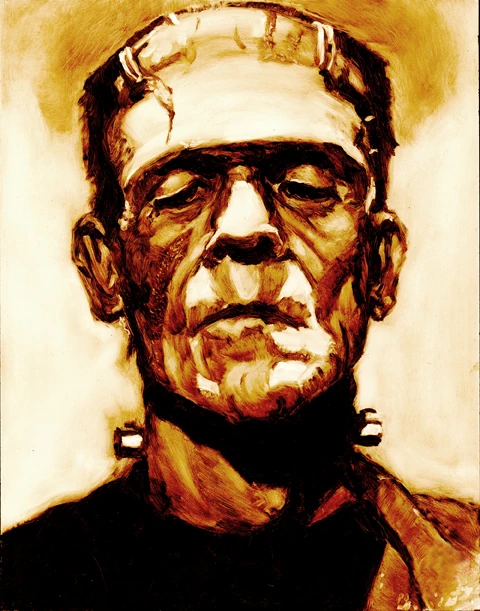
The most prominent example of the outside vs. inside theme is shown when Mary Shelley explains how the monster is treated based on his outside appearance. The monster finds himself trying to find his way in society but is proposed with a conflict of his looks. From listening to the family in the cottage and reading books, he begins to understand what it takes to be socially accepted and how what you have, what you look like, and your heritage will all affect the social status of somebody.
The outside vs. inside theme is especially important to understand as high school students. We often find ourselves making assumptions about someone’s personality and values just by their appearance. When reading the chapter in Frankenstein when Felix tries to beat up the monster and Agatha runs away with Safie, I felt bad for the monster and disappointed in the family's reaction. Then I realized that myself and everyone around me does it all the time. So many conversations are passed up because we can’t look past what someone is wearing, how much money they have, their ethnicity, the rumors that were spread about them, or even the way they wear their hair. I find it very interesting that many centuries have passed yet we still judge each other on the some of the same things.

Image result for frankenstein in the book

Thursday, January 26, 2017

The Scientific Plausibility of Frankenstein's Monster by Sarah West

For about a month now, we have ben reading and discussing the classic gothic novel Frankenstein by Mary Shelly in our english class. During one of our class discussions, the topic of the intelligence of the monster, and how he could have gained enough intelligence to talk to and interact with human beings was brought up. Since I have been learning a lot about the human body in the Human Body Systems and Biology classes I have been taking in school, my curiosity was immediately sparked. I began to wonder about this subject, and about the plausibility of Frankenstein's monster in general. As he is a character written as part of a fictional novel nearly 200 years ago, one might be quick to assume there is nothing feasible about sewing together body parts, then bringing the creature to life. However with the scientific advancement that has taken place since the time the novel was written, successful organ transplants taking place everyday, genetic engineering, and the technology available, Frankenstein's monster may be closer than he seems.

While in college, Frankenstein claims to have constructed his monster out of miscellaneous body parts after he discovered the secret to life. Disregarding the fact that there is no way to bring something that is completely lifeless to life, the existence of organ transplants seem to back up the possibility a whole new body could be constructed from many parts put together. Although it would be possible to connect major organs with blood vessels and muscle, the reconstruction of the nervous system is where things get dicey. Since, as I have learned in my biology and human body systems courses in school, nerve cells do not reproduce, there is basically no chance the brain would be able to connect to the spinal cord and have the ability to communicate with the rest of the body.  Even if, somehow, Frankenstein were to succeed in constructing the nervous system, he would then run into problems with the immune system. Since white blood cells automatically attack anything in the body that it does not recognize as self, and the monster is made up of organs and limbs from many different people, there is no telling what kind of havoc the system will cause as different organs are rejected, and maybe even a battle between multiple white blood cells and immune systems from multiple people takes place inside the monster. Frankenstein would have an easier time applying his discovery to dead human being, containing only the original body parts.

After the monster comes to life, he spends some time observing a family living in a cottage, in which time he learns to read and speak, with a decently expansive vocabulary as evidenced by his later conversation with Frankenstein. How exactly did Frankenstein learn to speak perfectly, read and come to understand human society in under 2 years? Well, theoretically, if the monster had a perfectly functioning human brain with the specific areas that are used to understand and produce language, he would have the same ability to learn language as any other human. That is still a stretch logically, since after two years most humans don't use words like "benevolent", "endeavoured" and "melancholy".  However it is doubtful that while trying the build the best, strongest and most amazing creature he could, Frankenstein would give his monster the brain of a newborn. If the monster was given the brain of an adult, his experience in learning how to speak could be closer compared to someone learning a new language rather than a baby learning to speak for the first time. This makes his ability to learn the language more believable, especially considering how dedicated he was. The idea of acquiring a brain from someone who has already lived a life of course opens up more theoretical questions about how it would function. Wouldn't he still have the personality and memories for the original owner since the brain creates personality and stores memory? Why then, would he not remember how to speak or remember how the world works?  Since humans have never actually physically transplanted someone's head, or brought someone back from the dead, there is really no way to explain or know for sure what the brain would be like in that situation.
Where language production and 
understanding take place in the brain

Is it actually possible to create a monster like that of Frankenstein's? No. Will modern day humans have to worry about monsters roaming the streets anytime soon? Doubtful. Will there ever be a way to scientifically explain how Frankenstein's monster could have been possible? Not yet, but who knows what the future will bring? While logically a monster like Frankenstein's is still purely fiction, the fact that we can taken organs from one person and put them into someone else, design children before they are born through genetics, and have the advanced technology we do today, makes humans closer than Mary Shelly could have probably ever imagined 200 years ago to having the scientific ability to do what Victor Frankenstein did in her novel.